How to Make Chenpi (Aged Tangerine Peel) at Home — A Complete Traditional Guide
Aged tangerine peel, aka chenpi, is a traditional Chinese ingredient prized for its warm, citrusy aroma, and it’s commonly used in soups, braised dishes, desserts, beverages, and even traditional Chinese medicine. One special thing about chenpi is that the older it gets, the better it becomes—with time, the flavor deepens, the aroma mellows, and its value increases. Unfortunately, it is really hard to find high-quality chenpi outside of China. The good news is that you can easily dry tangerine peels at home and age them yourself for years, even decades.
The types of tangerines because it determinds the quality of your chenpi. What I am using is Xinhui tangerine, a specific variety grown in Xinhui District, Jiangmen, Guangdong, China. The local climate, soil, and cultivation history give the peel a uniquely high concentration of aromatic oils and a distinctive balance of bitterness, sweetness, and warmth. Therefore, Xinhui tangerine is considered the best source for aging Chenpi.
Unfortunately, if you live outside of China, it is impossible to get access to buy Xinhui tangerines. In this case, choose local tangerines with large, dense, and abundant oil glands in the peel. Chenpi made from other varieties will still be fragrant and delicious in recipes. The only downside is that it won’t develop the same medicinal qualities, such as supporting digestion and helping ease coughing. Besides tangerines, I don’t recommend using other citrus fruits such as oranges, grapefruits, lemons, and pomelos, as their thick pith does not age well.

168 Better Than Takeout Chinese Recipes
168 tested recipes, each with a demo video and step-by-step photos.
How to Make Chenpi (Aged Tangerine Peel) at Home — A Complete Traditional Guide
Mandy Fu
Aged tangerine peel, aka chenpi, is a traditional Chinese ingredient prized for its warm, citrusy aroma, and it’s commonly used in soups, braised dishes, desserts, beverages, and even traditional Chinese medicine. One special thing about chenpi is that the older it gets, the better it becomes—with time, the flavor deepens, the aroma mellows, and its value increases. Unfortunately, it is really hard to find high-quality chenpi outside of China. The good news is that you can easily dry tangerine peels at home and age them yourself for years, even decades.
The types of tangerines because it determinds the quality of your chenpi. What I am using is Xinhui tangerine, a specific variety grown in Xinhui District, Jiangmen, Guangdong, China. The local climate, soil, and cultivation history give the peel a uniquely high concentration of aromatic oils and a distinctive balance of bitterness, sweetness, and warmth. Therefore, Xinhui tangerine is considered the best source for aging Chenpi.
Unfortunately, if you live outside of China, it is impossible to get access to buy Xinhui tangerines. In this case, choose local tangerines with large, dense, and abundant oil glands in the peel. Chenpi made from other varieties will still be fragrant and delicious in recipes. The only downside is that it won’t develop the same medicinal qualities, such as supporting digestion and helping ease coughing. Besides tangerines, I don’t recommend using other citrus fruits such as oranges, grapefruits, lemons, and pomelos, as their thick pith does not age well.
Ingredients
- 10 kg of tangerines
- 2 Tbsp salt
- 2 Tbsp baking soada
Directions
Fill you sink with water. Add the salt and baking soda and stir to dissolve, then soak the tangerines for 30 minutes. Most pesticide are acidic, and the baking soda helps to neutralize them.
After soaking, gently rub the tangerines with a clean sponge. Once done, drain the water from the sink and rinse all the tangerines thoroughly.
Set the tangerines aside and place them under a fan for a couple of hours or until there’s no moisture left on the surface. You can also dry the tangerines using kitchen papers.
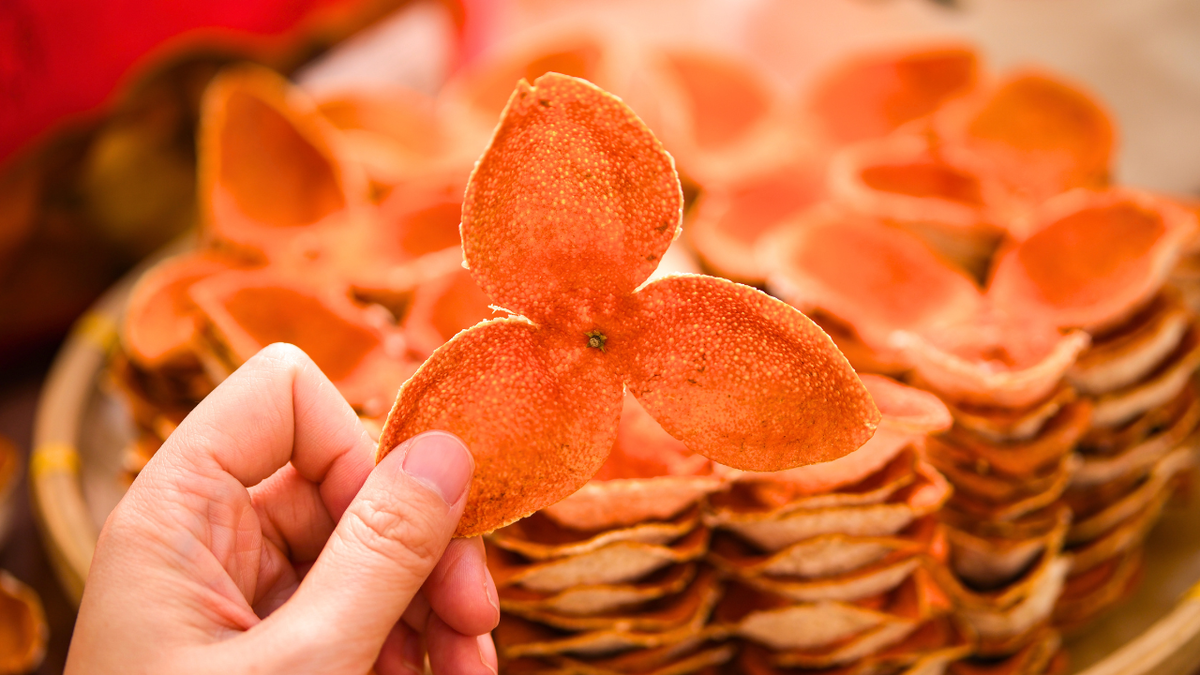
To peel each tangerines, use the end edge of a chefs knife, carefully score the peel into three even sections, stopping 1/2 inch before the dot where it connects to the stem so the peel remains connected. Insert a small spoon and gently open the peel like a flower. We want to preserve as much oil glands as possible so try not to use your fingers to peel the tangerines as you will bend or bruise the skin.
Remove the fruit inside and repeat with the remaining tangerines. If you’re a beginner, you can score the peel into four sections, which makes removing the fruit easier. However, fewer cuts are always better, since each cut risks damaging the oil glands.
We only need the peel for today’s purpose. As for the flesh, you can call your friends over and eat them or make tangerine jam.
Place all the tangerine peels on a tray or sheet and set them under direct sunlight. Check them after 3–5 hours—this step is important. You’re waiting for the peels to become slightly soft and wilted, which allows you to gently flip each petal inside out. If you try to flip them while the peels are still fresh and crisp, they can crack or bruise. That reduces the aromatic oils, and you’ll end up with less fragrant Chenpi.
During the drying, flip the peels in the middle of the day to ensure even drying. Before it gets dark, bring the peels indoors every day and leave them on the counter top covered with something that is not airtight during the night time.
The next day, place the peels back under direct sunlight and continue to sun dry for 3–5 days, about 4–6 hours each day, until they are completely dry. Remember to bring them indoors every night.
To check if your tangerine peels are done drying; take two pieces and tap them together. You should hear a dry, crisp sound. At this stage, you’ve made dried tangerine peel. What truly gives them the value is proper storage and time, so please follow the instructions to aged them:
During the first year, store the peels in a clean plastic bag but not necessary to seal it completely, as they need airflow to age. Keep the bag in a dark, cool, and dry place. You have to take the peels out to sun-dry 3 times a year for 1–2 days each time. This helps prevent mold and insects.
After the first year, you only need to sun-dry them once a year for 1-2 days each time.
After three years of storage, your dried tangerine peels officially become aged tangerine peels—known as chenpi. At this stage, you can transfer them to an air tight container. Remember to open it a few times a year to allow air exchange so the chenpi can continue aging properly.
For 3 years old or above tangerine peels, yearly sun-drying is no longer necessary, but you should still monitor their texture. If the peels start to feel soft, it means they’ve absorbed moisture from the air and need to be sun-dried again to prevent mold. If you follow my directions exactly, your chenpi can be preserved for decades.
Reader favorites