Easy Homemade Korean Kimchi Recipe
If you've ever thought about making kimchi at home but felt intimidated by the process, this recipe is for you.
Kimchi may look complex, but it is really a beautiful example of how a handful of simple ingredients can create something extraordinary. Fresh vegetables, aromatic seasonings, and fermentation come together to produce layers of flavor that are spicy, savory, sour, and deeply satisfying.
After making your first batch, you'll discover that homemade kimchi is not only easier than expected, but also fresher, more flavorful, and completely customizable to your own taste.

168 Better Than Takeout Chinese Recipes
168 tested recipes, each with a demo video and step-by-step photos.
Easy Homemade Korean Kimchi Recipe
Mandy Fu
If you've ever thought about making kimchi at home but felt intimidated by the process, this recipe is for you.
Kimchi may look complex, but it is really a beautiful example of how a handful of simple ingredients can create something extraordinary. Fresh vegetables, aromatic seasonings, and fermentation come together to produce layers of flavor that are spicy, savory, sour, and deeply satisfying.
After making your first batch, you'll discover that homemade kimchi is not only easier than expected, but also fresher, more flavorful, and completely customizable to your own taste.
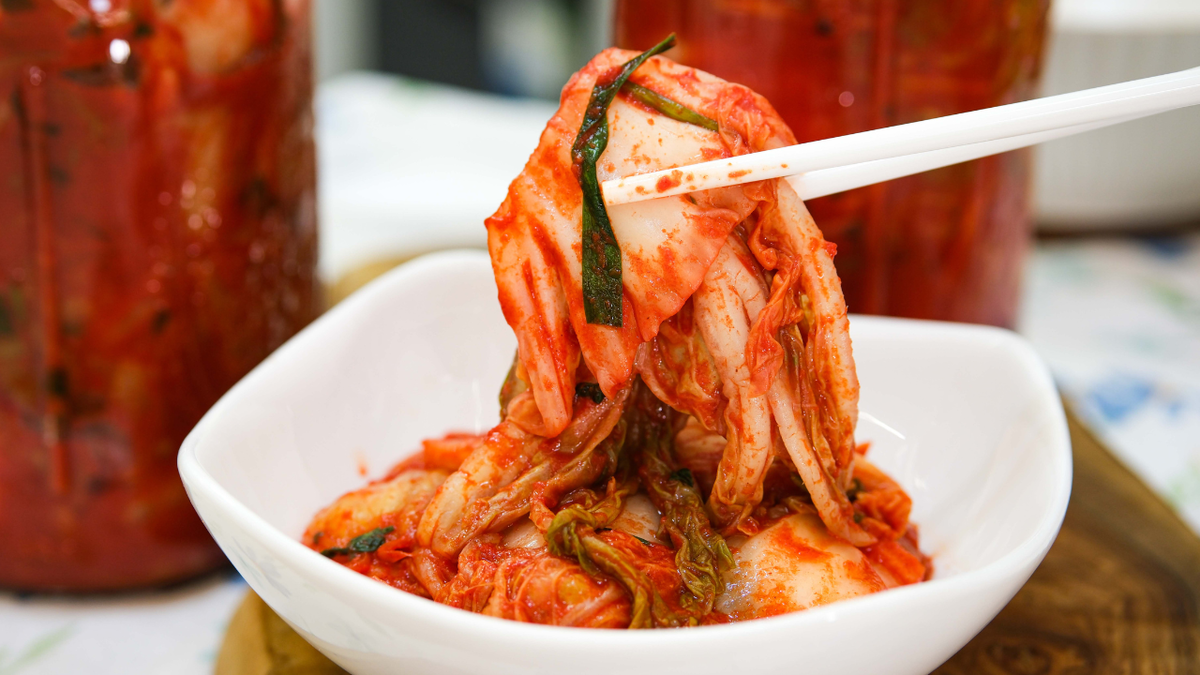
Ingredients
- 6 pounds napa cabbage, cut into bite sized pieces
- 1/2 cup of granulated salt
- 113g / 4 oz of julienned radish
- 57g / 2 oz of julienned carrot
- 57g / 2 oz garlic chives, cut into stalks
- 57g / 2 oz of scallions, diced
- 57g / 2 oz of cilantro, diced
- 2/3 cup of water
- 1 tbsp of glutinous rice powder
- 57g / 2 oz, about 10-12 cloves of garlic
- 1/2 inch ginger
- 1/4 of a sweet onion
- 1/2 of a pear
- 2 tbsp of honey
- 1/3 cup fish sauce
- 1/4 cup fermented salted shrimp (saeujeot)
- 1 cup Korean red chili powder
Directions
Quarter the napa cabbage, remove the core, and chop into bite-sized pieces.
Season the cabbage with 1/2 cup of salt and mix thoroughly. Let it sit for 1-2 hours until the leaves will soften and release a significant amount of water.
While the cabbage is resting, prepare the radish, carrot, garlic chives, scallions, and cilantro. Set aside.
In a small saucepan, whisk together the water and glutinous rice powder until no lumps. Cook over medium heat and stir constantly, until the mixture thickens into a smooth paste. Remove from the heat and allow it to cool completely.
In a blender or food processor, combine the garlic, ginger, onion, pear, honey, fish sauce, fermented salted shrimp, and cooled rice paste. Blend until smooth.
Mix the mixture with the radish, carrot, garlic chives, scallions, cilantro, and Korean red chili powder until evenly incorporated. Set aside.
Rinse the salted cabbage 2-3 times under cold water to remove excess salt. You can try a piece and the sodium level should about the same as your regular taste.
After the rinse, squeeze the cabbage to remove as much water as possible.
Add the squeezed cabbage to the seasoning mixture and toss until every piece of cabbage is thoroughly coated.
Transfer the kimchi to clean jars or containers, pressing down firmly to remove air pockets. Leave about 1.5 inch of space at the top to allow for expansion during fermentation.
Enjoy it immediately, or leave it at room temperature for 1–3 days, depending on your kitchen temperature and how tangy you like it.
Once it reaches your preferred flavor, transfer it to the refrigerator. It will keep well for a long time (almost indefinitely), continuing to ferment slowly. The longer it sits, the more sour and complex the flavor becomes.
Reader favorites