How to Grow Bean Sprouts at Home
Today, I want to share something simple and quietly satisfying with you—growing bean sprouts at home. I actually made a detailed video about this about 7 years ago (you can check it out here: https://youtu.be/lIVdAMJZ8uU), but looking back now, I think I made it more complicated than it needs to be.
The truth is, bean sprouts are one of the easiest things you can grow. All you need is a planter that drains and a little bit of patience. So in this post, I’ll keep everything as simple as possible.

168 Better Than Takeout Chinese Recipes
168 tested recipes, each with a demo video and step-by-step photos.
How to Grow Bean Sprouts at Home
Mandy Fu
Q&A
1. Why do we block the sunlight when growing bean sprouts?
Because light changes the sprouts. When exposed to sunlight, the beans start producing chlorophyll, which turns the sprouts green, tougher, and sometimes slightly bitter. In darkness, the sprouts stay pale, thick, juicy, crisp, and mildly sweet — the texture we want in Chinese cooking. Keeping them in the dark also encourages the stems to grow longer instead of developing leaves.
2. Will this method work for mung bean sprouts?
Yes! The growing method is basically the same. Besides soybeans and mung beans, there are actually many other beans and seeds you can sprout at home, such as green peas, lentils, radish seeds, broccoli seeds, and more. The process is similar, but different beans take different amounts of time to sprout and grow.
3. Can you eat homemade bean sprouts raw?
For most bean sprouts, yes. However, not every bean should be eaten raw after sprouting. For example, kidney beans contain natural toxins when raw and must be cooked thoroughly. Personally, I still prefer cooking sprouts. Since they grow in a warm and humid environment, cleanliness is very important during the process. A quick blanch, stir fry, or soup is usually safer and, in my opinion, tastes better too.
4. How long should you soak the beans first?
Usually, 12–16 hours is enough. You want the beans to fully absorb water and become plump before starting the sprouting process.
5. How long do the sprouts keep, and where should you store them?
Once fully grown, I usually give them a good rinse and store the sprouts in the fridge for 3-4 days. If you keep them in the same container they were grown in, they can stay fresh for up to a week, based on my experience. Just make sure they are well-drained and not sitting in too much water.
6. Do the outer skins just fall off? Where do the husks go?
Yes, many of the skins naturally loosen and fall off during rinsing and watering. Some float to the top, which makes them easier to remove. There will always be a few stubborn husks attached, especially with soybeans, but they don't bother me at all. I just eat them anyway.
7. How do you prevent mold?
The most important thing is starting with fresh, viable beans. Try to buy newer crop beans and pick out any broken or damaged ones during soaking. If your soybeans become moldy within 5 days, it usually means the beans are old, poor quality, or no longer alive enough to sprout properly. Healthy, fresh beans normally should not mold when sprouting.
A bit of my personal experience: when I lived in Ecuador, I had a hard time sprouting soybeans. They barely sprouted, and after a few days, they would start to smell bad and grow mold. My guess is that the beans had somehow been heat-treated or deactivated before being sold. After switching to mung beans, everything grew beautifully. So if one type of bean is not working well for you, try switching to a different variety 😊❤️
Ingredients
- soybeans
- water
Directions
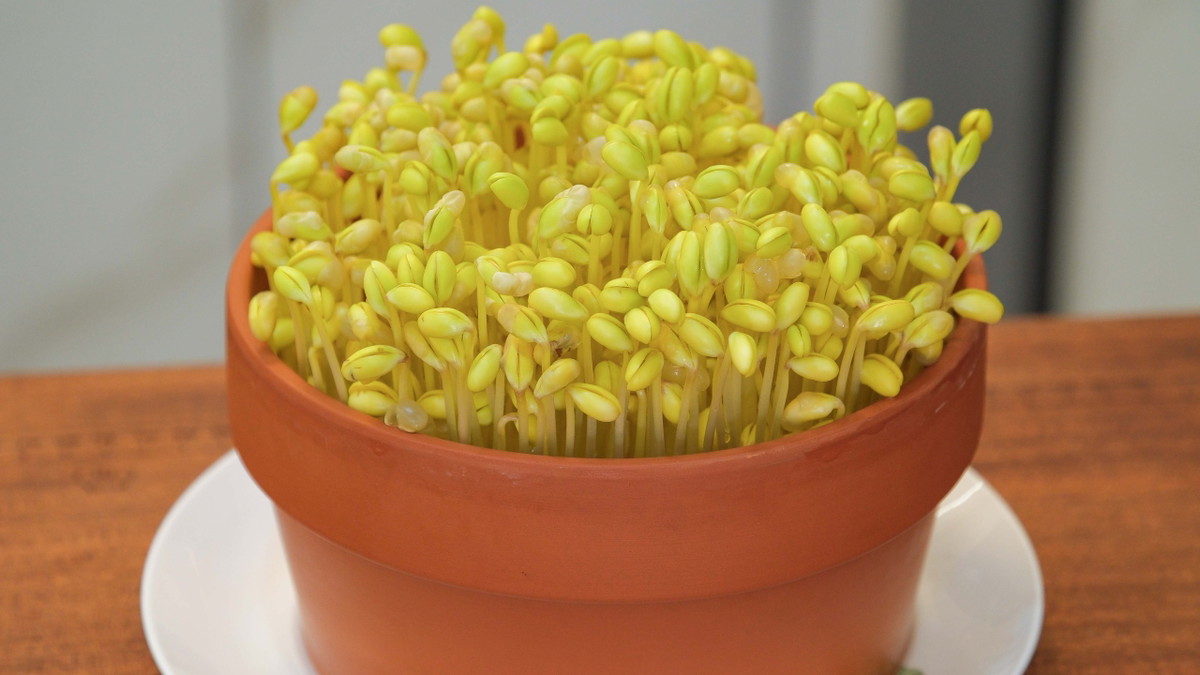
- Soak the soybeans in clean water overnight, or for 12–16 hours, until fully rehydrated and plump.
- Prepare a planter or colander with drainage holes. If the holes are large, line the bottom with a piece of paper towel or cheesecloth to prevent the beans from falling through.
- Spread the soaked soybeans evenly in the container. Cover the beans with another damp paper towel to help retain moisture during the growing process.
- Block out the light by covering the container with a lid, ceramic plate, or dark cloth. Keeping the sprouts in darkness helps them stay tender, juicy, and pale in color.
- Place the container somewhere warm, ideally between 21–27°C (70–80°F). Set the planter on a plate or tray to catch excess water.
- Water the beans twice a day, once in the morning and once at night. The water collected in the tray can remain until the next watering.
- Continue growing the sprouts for 5–7 days.
- Store the bean sprouts in the refrigerator and use within a few days for the best flavor and texture.
Reader favorites