Reveal Chinese Restaurant Secret Technique: Oil Velveting Explained
Today we’re making classic Sichuan Spicy and Numbing Beef (香辣牛柳)—and I will use this recipe to reveal the biggest Chinese restaurant secret technique: 滑油. This method delivers a tenderness no other method can truly compete with. Try it once, and you’ll thank me later.
Huayou (滑油huá yóu) is often called oil velveting in English, but I like to call it oil poaching because that is what the technique is about. Lightly coated meat quickly passes through moderately hot oil—just hot enough to set the surface without any browning. This process locks in moisture and flavor and protects the meat during stir-frying. The result is that ultra-smooth, silky, restaurant-style texture everyone loves.
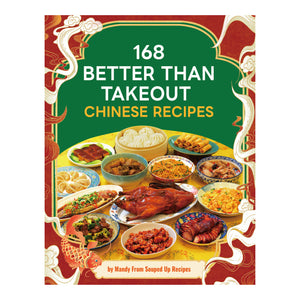
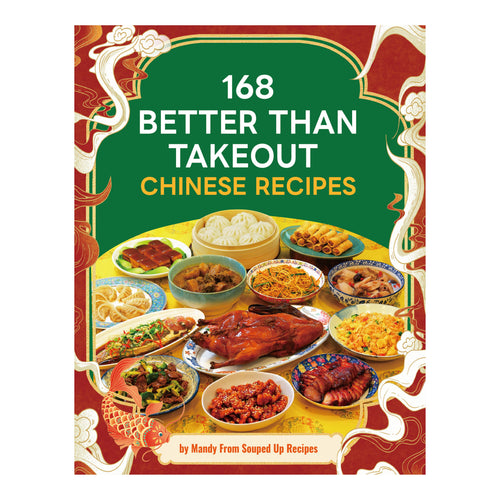
168 Better Than Takeout Chinese Recipes
168 tested recipes, each with a demo video and step-by-step photos.
Reveal Chinese Restaurant Secret Technique: Oil Velveting Explained
Mandy Fu
2
20 minutes
20 minutes
Today we’re making classic Sichuan Spicy and Numbing Beef (香辣牛柳)—and I will use this recipe to reveal the biggest Chinese restaurant secret technique: 滑油. This method delivers a tenderness no other method can truly compete with. Try it once, and you’ll thank me later.
Huayou (滑油huá yóu) often called oil velveting in English, but I like to call it oil poaching because that is what the technique is about. Lightly coated meat quickly passes through moderately hot oil—just hot enough to set the surface without any browning. This process locks in moisture and flavor and protects the meat during stir-frying. The result is that ultra-smooth, silky, restaurant-style texture everyone loves.
Huayou is basically an oil-based poaching. As opposed, Chinese cooking also uses a water-based poaching method, which I’ve shown you in a previous recipe - https://youtu.be/-GZ9GwUnGEs
Ingredients
- 350g / 12.3 oz of beef, recommend flank steak, New York strip, ribeye, and sirloin
- 1/4 tsp salt
- 1/4 tsp white pepper
- 1/4 tsp of garlic powder
- 1 egg white
- 1 tbsp soy sauce
- 2.5 tbsp cornstarch
- 2 tbsp of water
- 2 tbsp of oil to coat the beef
- 1.5 cups of oil to poach the beef
- 227g / 0.5 lb of bean sprouts
- 2 tbsp of oil to stir fry
- 4 cloves of garlic, crushed and diced
- 1-2 Tbsp of red chili flakes or powder
- 1 tbsp of Sichuan Dou Ban Jiang
- 5 Thai bird eye chilies, diced
- 2 green chili peppers, diced
- 85g / 3 oz of celery
- 1/2 tbsp of Sichuan peppercorn powder
Directions
Cut the beef into a few big chunks. Then slice the beef into 1/8 of an inch thick slices. Recommend using flank steak, ribeye, and sirloin.
Marinate the beef with 1/4 tsp of salt, 1/4 tsp ground white pepper, 1/4 tsp of garlic powder, 1 tbsp of soy sauce, and 1 egg white, and mix for a few minutes.
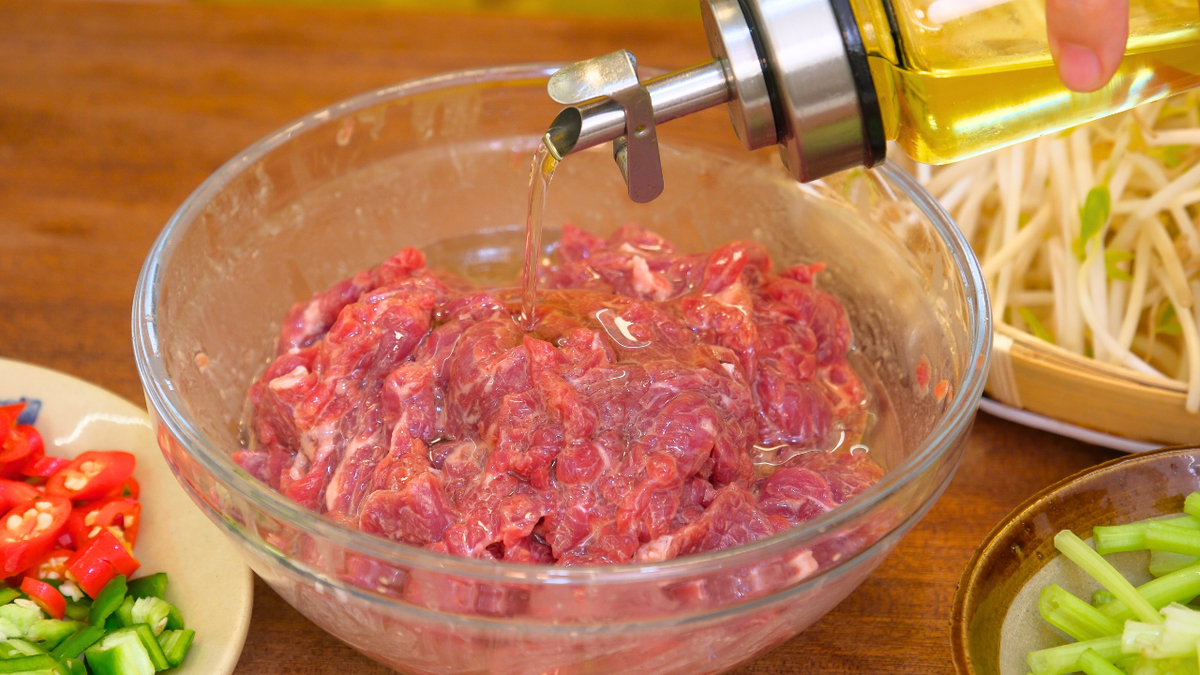
Quickly mix 2.5 tbsp of cornstarch and 2 tbsp of water until no lumps, and pour it into the beef. Stir until all the mixture is absorbed. Drizzle in 2 tbsp of oil and mix to coat the beef. This helps to separate the meat slices so they don’t stick together while oil poaching.
Once the beef is done marinating, we can start the huayou technique. Heat the wok to smoking hot and add 1.5 cups of oil. Bring the oil to 320 F over medium heat. Do not overheat the oil because we are not doing deep frying. If the oil is too hot, you’ll get browning and ruin the silky texture.
As soon as the beef slices just change color, take them out immediately and drain them well in a sieve. This step is crucial—good draining is what keeps the final dish from being greasy. Don’t toss out the oil. You can reuse it for other cooking purposes.
- Add a bunch of bean sprouts to the same wok and stir-fry over medium heat until just wilted. Spread the bean sprouts evenly on a serving plate.
- Add about 2 tbsp of oil, diced garlic, 1-2 Tbsp of red pepper flakes, and 1 tbsp of Sichuan Dou Ban Jiang to the wok. Stir over low heat for a minute or 2.
- Introduce the beef back into the wok. Continue by adding diced Thai bird's-eye chilies, diced green chili pepper, and celery stalks. Stir over medium heat for a couple of minutes. Last, add 1/2 tbsp of Sichuan peppercorn powder and give it a final toss until everything is well-mixed.
- Serve the beef onto the bean sprouts.
Reader favorites