How to Choose a Carbon Steel Wok for Electric, Induction, and Gas Stoves
A carbon steel wok is an adaptable everyday pan, but the best choice depends on the stove you own, the amount you cook, and the way you like to handle a pan. Carbon steel responds quickly to heat and develops a working seasoning layer through use. Its value is not that it turns every home burner into a restaurant wok station. Its value is that, with the right base, size, and workflow, it makes stir-fries, noodles, fried rice, vegetables, and one-pan meals easier to cook well.
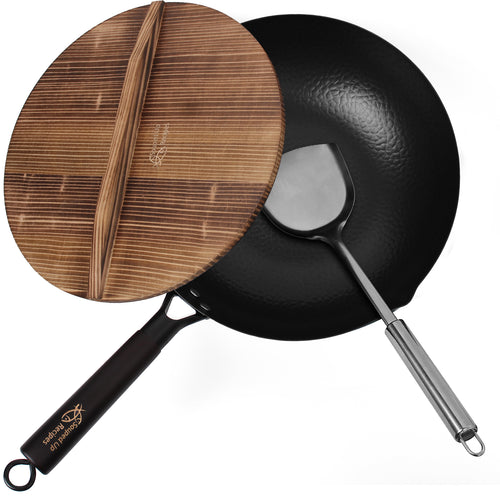
Start with your heat source. A traditional round-bottom wok is designed around flame that climbs the sides of the bowl. A standard electric or induction cooktop heats through the base contact area instead. A flat-bottom carbon steel wok is therefore the practical choice for most home electric and induction kitchens, while gas cooks have more flexibility if the wok sits securely and the burner setup supports it.
Choose your wok by stove first
| Your stove | Most practical wok base | What to expect |
|---|---|---|
| Standard gas burner | Flat bottom for easy stability; round bottom only with a secure, suitable setup | Responsive heat and more flexibility in pan shape |
| Electric coil or smooth-top electric | Flat bottom | Heat comes through the base; cook in manageable batches |
| Induction | Flat, magnetic carbon steel base that makes good contact with the zone | Fast base heat, but less side-wall heating than a flame-based wok setup |
| Dedicated concave wok burner | Round bottom may be appropriate if the burner and wok are designed to work together | The closest match to the traditional wok shape and heat pattern |
Quick answer: for a typical home electric or induction stove, choose a flat-bottom carbon steel wok. For gas, prioritize stability and the burner you actually have; a flat-bottom wok remains the versatile default for many homes.
The important induction caveat
Carbon steel is magnetic, but compatibility depends on the base and cooking zone. A round-bottom wok has too little stable contact with a standard flat induction surface. A flat-bottom wok is the sensible choice, but it will still heat differently from a wok over flame: the burner concentrates heat where the base meets the surface instead of heating the sides with rising hot gases.
That does not mean an induction cook cannot make excellent stir-fries. It means the technique needs to fit the equipment. Preheat patiently, cook smaller batches, keep ingredients ready, and spend less time lifting the wok away from the cooking zone. As a practical comparison of the limitation, Tom’s Guide explains why induction does not heat a wok’s sides in the same way as a gas flame. Use that fact to adjust expectations, not to abandon the tool.
Check the wok’s product guidance and your cooktop’s manual. If you are unsure whether a pan is induction-compatible, a magnet test on the flat base can offer a quick initial check, but the manufacturer’s stated compatibility is the authority.
Choose a size you will actually use
| Wok size | Best for | Trade-off |
|---|---|---|
| 10 inch | One or two servings, a compact burner, easy handling | Less room for a large stir-fry batch |
| 12–12.5 inch | Regular home meals and versatile day-to-day cooking | Requires enough burner space and storage |
| 13 inches and above | Larger batches and family meals | Heavier and less effective if the home heat source is too small |
More surface area is useful only when your burner can support it. A large wok crowded with cold ingredients on a modest burner will steam rather than sear. A smaller wok cooked in two organized batches often produces a better dinner than an oversized pan used all at once.
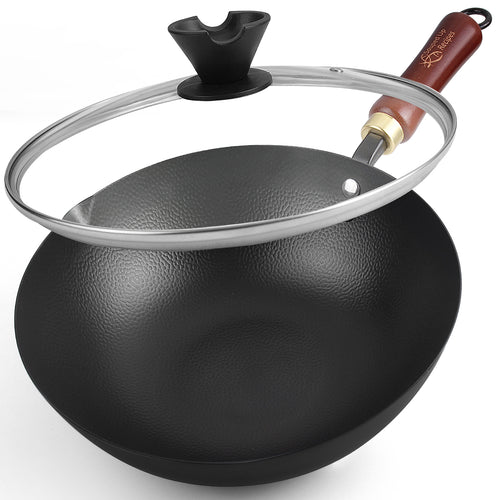
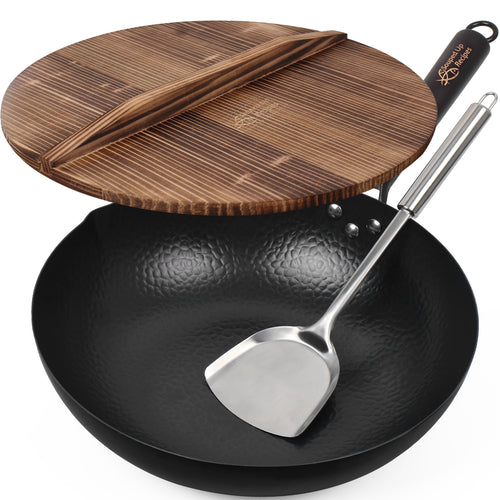
For a compact daily option, consider the 10-inch carbon steel wok. For a flexible flat-bottom size, see the 12.5-inch carbon steel wok. For greater capacity, the 13.4-inch wok gives more room when your burner and storage support it.
Carbon steel is a working surface, not a perfect nonstick coating
Carbon steel changes as you cook with it. Seasoning develops as a very thin layer of oil is heated on the surface over repeated use. The result is not a uniform factory coating, and it does not need to look flawless to work well. Color variation, darker areas, and marks from regular cooking are normal.
Follow the care instructions for your specific wok, particularly if it arrives pre-seasoned or has an initial protective coating that must be removed. In daily use, preheat appropriately, use enough oil for the recipe, and avoid adding a large amount of cold, wet food to a barely warm pan. Many apparent “seasoning failures” are actually preheating, crowding, or moisture problems.
Do not chase perfection after one meal. A wok improves with calm, ordinary use: cooking vegetables, frying eggs, making noodles, and cleaning and drying it well. If food sticks, diagnose the sequence before stripping the whole pan. Was the wok hot enough? Was the oil added at the right time? Was the pan crowded? Did a sauce arrive before the ingredients had a chance to cook?
A better home-wok workflow
1. Prep before heat
Slice vegetables, portion protein, mix sauce, and place a serving dish nearby before turning on the burner. Stir-frying is quick. A wok cannot compensate for a cook who is opening bottles or chopping garlic while the pan is already hot.
2. Preheat with purpose
Heat the wok as the recipe directs, then add oil and ingredients in the correct sequence. On electric and induction, allow the flat base to heat fully. On gas, do not leave an empty carbon steel wok over high heat longer than necessary. The goal is controlled heat, not a pan left unattended until it smokes heavily.
3. Cook in batches when needed
Crowding is the enemy of a good home stir-fry. Ingredients release moisture; a crowded pan cannot recover heat quickly enough to evaporate it. Cook protein or a large volume of vegetables in stages when appropriate, then combine them with sauce at the end.
4. Use the base and sides intentionally
On a flat cooktop, the base is your hottest zone. Use it for the ingredient that needs the most active heat, then move cooked pieces up the sides briefly as you make space. Do not expect the sidewalls to be as hot as they would be over a powerful gas flame. This is a useful home technique, not a lesser version of cooking.
Match the wok to the dish
A carbon steel wok shines in meals that move quickly and benefit from a broad cooking surface: stir-fried greens, fried rice, noodles, eggs, tofu, sliced meats, and saucy dishes that come together at the end. It is less useful as the only answer for every cooking task. A long soup, a slow braise, or a delicate low-and-slow sauce may be easier in a pot or saucepan.
Use the tool’s strengths. Beef Lo Mein is a natural first wok recipe because the ingredients are prepared in advance and come together quickly. Once that workflow feels comfortable, try vegetables, fried rice, or another noodle dish. Confidence comes from repeating a manageable process, not from attempting the largest possible batch first.
Everyday care and storage
After cooking, let the wok cool enough to handle safely. Clean it according to the manufacturer’s guidance, dry it thoroughly, and apply a very thin film of oil if the product instructions recommend it. Do not leave a wet carbon steel wok in the sink or store it while moisture remains on the surface.
Avoid using harsh assumptions as care rules. Some cooks say carbon steel can never see soap; in practice, mild cleaning according to the wok maker’s care instructions is more useful than a universal internet rule. The important habits are prompt cleaning, complete drying, and returning the pan to normal cooking use.
Common problems and practical fixes
| Problem | Likely cause | First adjustment |
|---|---|---|
| Food sticks | Pan not preheated, too little oil, or pan too crowded | Improve the sequence before blaming the seasoning |
| Vegetables turn watery | Cold food and too much volume lower the pan’s heat | Cook smaller batches and prepare ingredients first |
| Induction stir-fry feels less forceful | Heat is concentrated at the flat base | Use a flat-bottom wok, preheat, and shorten batch size |
| Wok is too heavy or awkward | Pan is larger than the cooktop or cook’s routine supports | Choose the smallest size that suits normal meals |
| Dark or uneven surface | Normal seasoning development | Keep cooking and follow product care rather than trying to make it look new |
Common questions
Will a carbon steel wok work on induction? A flat-bottom carbon steel wok can work on a compatible induction cooktop because carbon steel is magnetic. Check both the wok and cooktop guidance, and expect base-focused heating rather than gas-like side-wall heat.
Is a round-bottom wok better? It can be excellent over a suitable gas or dedicated wok burner. For most standard electric and induction kitchens, a flat-bottom wok is more stable and practical.
What is the best wok size for a family? A 12–13-inch wok is often useful when the burner is strong enough and storage is comfortable. If the burner is modest, cooking in batches can be more effective than buying a very large pan.
Do I need to season a pre-seasoned wok? Follow the product’s care guide. Pre-seasoned does not mean maintenance-free; it means the pan has a starting surface that develops through ordinary cooking.
Further reading

168 Better Than Takeout Chinese Recipes
168 tested recipes, each with a demo video and step-by-step photos.
Reader favorites